
Stirva Team
Dec 20, 2025
How to Convert Recipe Units in Baking (Grams, Cups, Tsp, Tbsp)
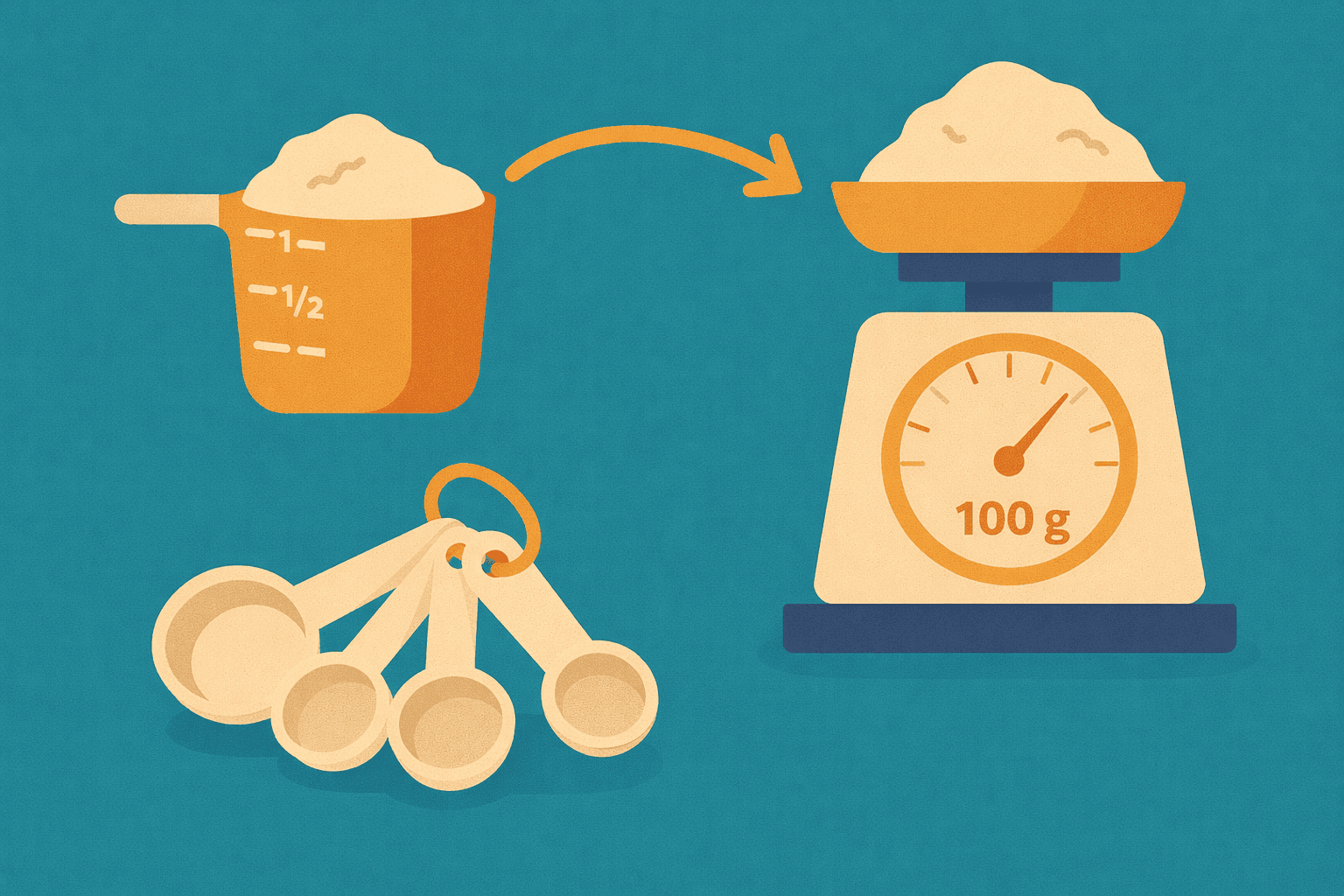
How to Convert Recipe Units & Handle Density in Baking
When pricing baked goods, unit conversion is one of the most common places home bakers get stuck.
Recipes often use cups, tablespoons, or pieces, while ingredient prices are listed in grams, kilograms, or liters. If these units aren’t converted correctly, recipe costs - and profits, quickly become inaccurate.
This guide is an extension of How to Calculate Baking Ingredient Costs: The Ultimate Guide to Accuracy and Profit and explains how to convert recipe units properly, including density conversion, so your costing stays consistent and reliable.
Why Unit Conversion Matters for Recipe Costing
Incorrect conversions lead to:
Underestimated recipe costs
Lower profit margins
Pricing decisions based on guesswork
Accurate pricing starts with converting everything into consistent base units.
The 3 Unit Types Home Bakers Work With
1. Mass (Weight) - grams (g), kilograms (kg), ounce (oz), pounds (lb)
2. Volume - ml, liters, cups, tablespoons, teaspoons
3. Count / Abstract - pieces, slices, bunches, sticks
Why Cups Can’t Be Converted Directly to Grams
A cup is a volume unit, not a weight.
That’s why:
1 cup of flour
1 cup of sugar
1 cup of butter
…all weigh different amounts.
This difference is caused by density — how heavy an ingredient is for a given volume.
How to Determine an Ingredient’s Density
There are two reliable approaches home bakers can use.
Method 1: Measure It Yourself (Most Accurate)
Best for frequently used ingredients
Steps:
Place an empty bowl on a digital scale
Tare the scale
Measure 1 cup (or 1 tbsp) of the ingredient
Weigh it
Example:
1 cup flour = 120 g (based on how you scoop)
From then on:
½ cup = 60 g
2 cups = 240 g
Consistency matters more than perfection.
Method 2: Use Standard Baking References
Good for general use and consistency
Common averages:
1 cup flour ≈ 120 g
1 cup sugar ≈ 200 g
1 cup butter ≈ 227 g
1 tbsp cocoa ≈ 5 g
Use one reference consistently across recipes.
Handling Abstract Units (Slices, Pieces, Bunches)
Convert these to a cost per unit.
Example:
12 eggs cost $4.20
Cost per egg = $0.35
Recipe using 2 eggs:
2 × $0.35 = $0.70
For vague units (bunch, slice), define a standard once and reuse it.
Converting Abstract Units Into Mass or Volume (Critical for Recipe Costing)
Sometimes recipes don’t just count ingredients — they require precise weights or volumes.
For example:
A recipe needs 100 g of egg whites
But eggs are bought by the dozen
Or a recipe needs 120 ml of fresh orange juice
But oranges are bought by the piece
In these cases, abstract units like “1 egg” or “1 orange” must first be converted into grams or milliliters before accurate costing is possible.
This step is essential for proper recipe costing.
Example 1: Eggs Bought in Pieces, Used by Weight (Egg Whites)
Scenario
You buy eggs by the dozen
Your recipe uses 100 g of egg whites
Egg sizes vary, so weight per egg is not fixed
Because egg sizes differ, the most accurate approach is to measure your own eggs once.
Crack 3–5 eggs (the type you usually buy)
Separate the egg whites
Weigh the total egg whites
Divide by the number of eggs used
Example
4 eggs produce 120 g of egg whites
Average egg white per egg = 30 g
This becomes your working standard.
Why This Conversion Guide Matters
Accurate pricing starts with accurate measurements.
When recipe units don’t match how ingredients are purchased, even small conversion errors can quietly reduce your profit on every order. This guide helps home bakers understand how mass, volume, density, and abstract units work together, so recipe costs are based on facts—not assumptions.
By mastering unit and density conversion:
Recipe costing becomes consistent and repeatable
Scaling recipes stays accurate
Pricing decisions are made with confidence
This guide supports proper recipe costing and pricing, making it a critical foundation for running a profitable home baking business.
How Stirva Handles Unit & Density Conversion for You
Unit and density conversion doesn’t have to live in your head.
With Stirva’s Recipe Cost Calculator, home bakers can save all their ingredients once and work in any measurement — grams, ml, cups, teaspoons, tablespoons, or pieces. Abstract units like eggs, oranges, or bunches can be converted into grams or ml and reused consistently across recipes.
Stirva automatically:
Converts units behind the scenes
Handles piece-to-mass or piece-to-volume conversions
Calculates recipe costs instantly
Updates costs when ingredient prices change
No spreadsheets. No mental math.
And when you’re unsure about density — for example, how many grams are in a tablespoon of cocoa or how much juice comes from one orange — Stirva’s AI assistant can guide you with practical, real-world conversion suggestions so you can move forward with confidence.
This means less guessing, more accuracy, and pricing you can trust.
Start your free 30-day trial of Stirva.app and see how easy it is to automatically calculate your true recipe costs, track all your expenses, and set prices that actually lead to profit!
Read more blogs like this
More guides on costing, pricing, and running a profitable home bakery.

Best Home Bakery Software (2026): 6 Apps Compared Honestly

We compared Stirva, BakeProfit, Bakesy, Hotplate, BatterSuite and Cottage CMS on price, per-order fees and features, using a baker taking 20 orders a month.
Stirva Team
Oct 13, 2026

How to Scale a Recipe for Large Orders Without Ruining It
Multiplying every ingredient by the same factor is how scaled batches collapse. Here is what actually changes for leavening, salt, eggs, and pan size.
Stirva Team
Sep 15, 2026

How to Schedule Baking Orders: A Weekly System That Actually Holds
Stop rebuilding your week every Monday. A repeatable scheduling system for home bakers: how to find your real capacity, batch your days, and stop overcommitting.
Stirva Team
Aug 18, 2026